
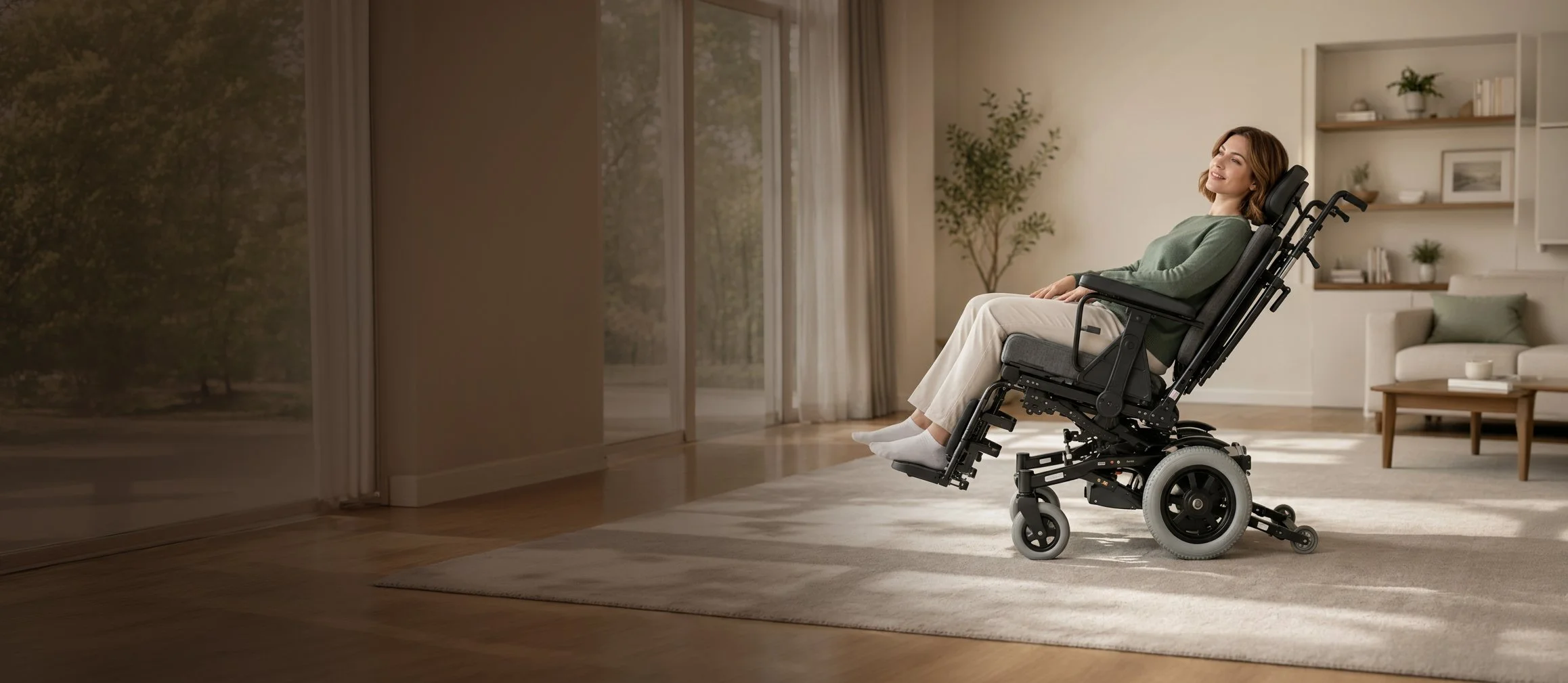
Tilt-in-Space Wheelchairs Built Around You.
Personalized mobility and seating solutions designed to support posture, pressure management, comfort, function and safer caregiver assistance.
SUPPORT. POSITIONING. COMFORT.
UNDERSTANDING TILT-IN-SPACE
Change position while maintaining the seated angle.
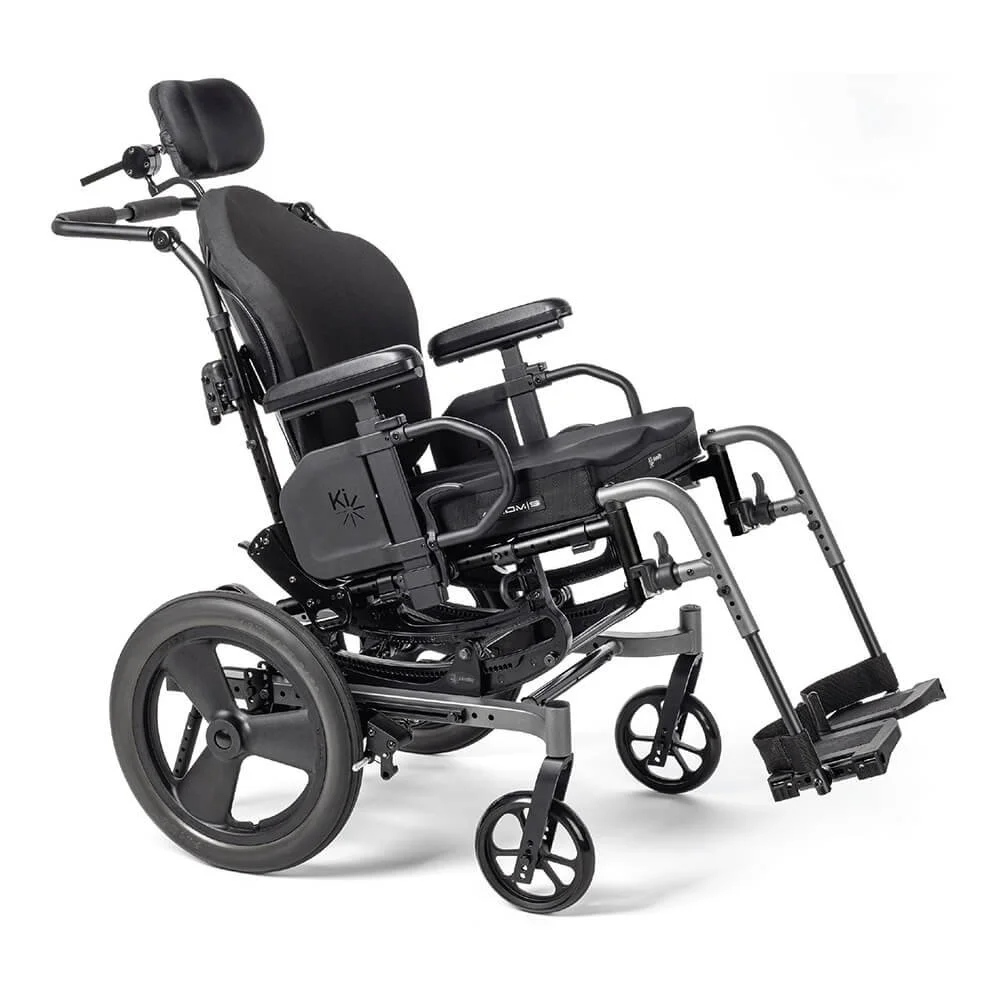
A tilt-in-space wheelchair rotates the seating system backward as a unit, generally maintaining the angle between the seat and back. This can help redistribute pressure, support alignment and provide a more stable resting position without requiring the individual to actively reposition.
Tilt is not the same as recline. Tilt changes the orientation of the entire seating system; recline opens the seat-to-back angle. The appropriate system is determined through an individualized evaluation.
CLINICAL AND FUNCTIONAL BENEFITS
Support that changes throughout the day.
Benefits depend on the individual's presentation, equipment configuration and recommended tilt schedule.
Pressure Management
May assist with pressure redistribution when used at an appropriate tilt angle and as part of a complete skin-protection plan.
Caregiver Access
Can improve access for repositioning, personal care and assisted pressure-management routines.
Postural Support
Can help maintain pelvic and trunk alignment for individuals who cannot sustain an upright position independently.
Head & Trunk Control
May create a more stable orientation for individuals with limited head or trunk control.
Comfort & Fatigue
Offers position changes that may improve tolerance for prolonged sitting and reduce the effects of fatigue.
Safety & Stability
A personalized setup may reduce sliding and support safer positioning during daily mobility.
WHO MAY BENEFIT?
For individuals who need more than basic wheelchair support.
A tilt-in-space system may be considered when a person cannot independently perform effective weight shifts or maintain safe seated posture.
Limited independent pressure relief
History or risk of skin breakdown
Poor trunk or head control
Abnormal muscle tone or spasticity
Progressive neurological conditions
Significant weakness or fatigue
Fixed or flexible postural asymmetry
Need for caregiver-assisted positioning
Pediatric growth and positioning needs
SEATING AND POSITIONING
The tilt mechanism is only one part of the system.
Effective positioning depends on the relationship between the wheelchair frame, cushion, back support and individually selected components.
Skin-protection or positioning cushion
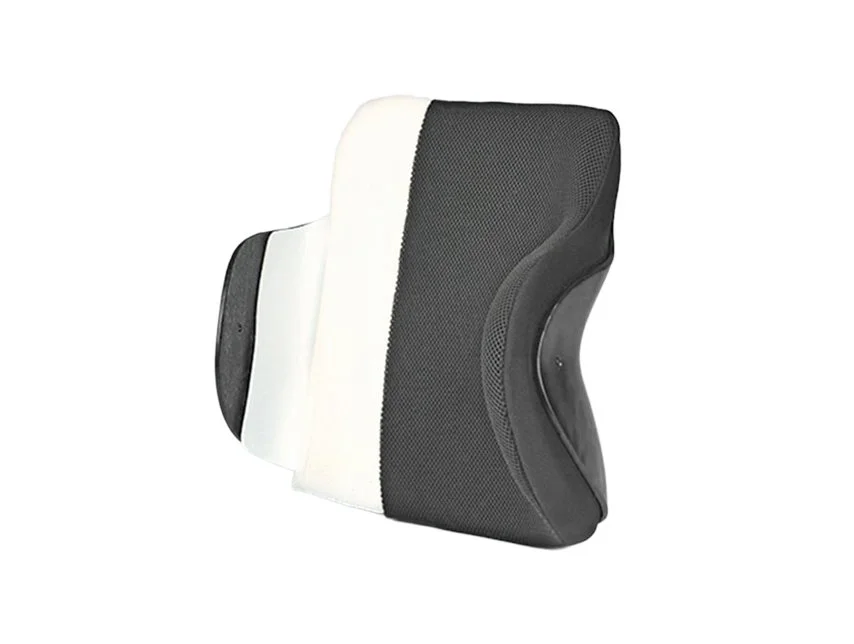
Contoured or custom back support
Head and neck support
Lateral trunk and thigh supports
Pelvic-positioning belt
Foot, calf and upper-extremity support
PERSONALIZED CONFIGURATION
Configured around the person and the caregiver.
-
Selected around transfers, foot propulsion, table access, caregiver ergonomics and the overall seating system.
-
Manual or powered tilt and release placement are selected around the user's and caregiver's abilities.
-
Width and depth are measured to support stability, pressure distribution, growth and functional access.
-
Hangers, footplates and calf supports are configured around range of motion, tone and positioning needs.
-
Rear wheel and caster choices influence maneuverability, stability, propulsion and transport.
-
Home access, vehicle transportation, turning space, weight and daily destinations are considered.
CAREGIVER-CENTERED DETAILS
Support for the people providing support.
Ergonomic Push Handles
Selected height and style can improve control and caregiver body mechanics.
Foot-Activated Tilt
Allows the caregiver to manage tilt while maintaining control of the wheelchair.
Attendant Brakes
May improve control on ramps, inclines and during community mobility.
Removable Components
Can support transfers, transportation, cleaning and routine care.
Broda
Encore
Synthesis
EQUIPMENT OPTIONS
Adult and pediatric tilt-in-space solutions.
Models shown are examples. Final recommendations depend on clinical findings, measurements, environment and funding requirements.
Freedom Designs
ProCG
Ki Mobility
Liberty
CR45
Little Wave Arc
PDG Mobility
Bentley LT
Quickie
IRIS
Access
SR45
Personalized Seating
Cushions
Back supports
Positioning components
THE MOMENTUM PROCESS
Dedicated support through every step.
01.
Referral & Benefits
02.
ATP & Therapy Evaluation
03.
Equipment Trial
04.
Documentation
05.
Authorization & Order
06.
Delivery & Fitting
07.
Ongoing Support
Frequently Asked Questions. What To Expect.
-
Tilt changes the orientation of the entire seating system while generally maintaining the seat-to-back angle. Recline changes the angle between the seat and back.
-
Tilt may help redistribute pressure when used at an appropriate angle and with a suitable seating system. The clinical team determines the recommended strategy.
-
Some configurations allow foot or hand propulsion, but feasibility depends on seat height, wheel placement, strength, coordination, posture and safety.
-
Yes. Pediatric systems can accommodate growth, positioning, caregiver access and transportation needs.
-
Momentum completes the final fitting, component adjustments, caregiver education and safe-use instruction, then remains available for service and support.
Your mobility needs are complex. The process doesn't have to be.
Let our ATP-led team help identify and configure a mobility solution built around your medical needs, functional goals, home environment and lifestyle.