
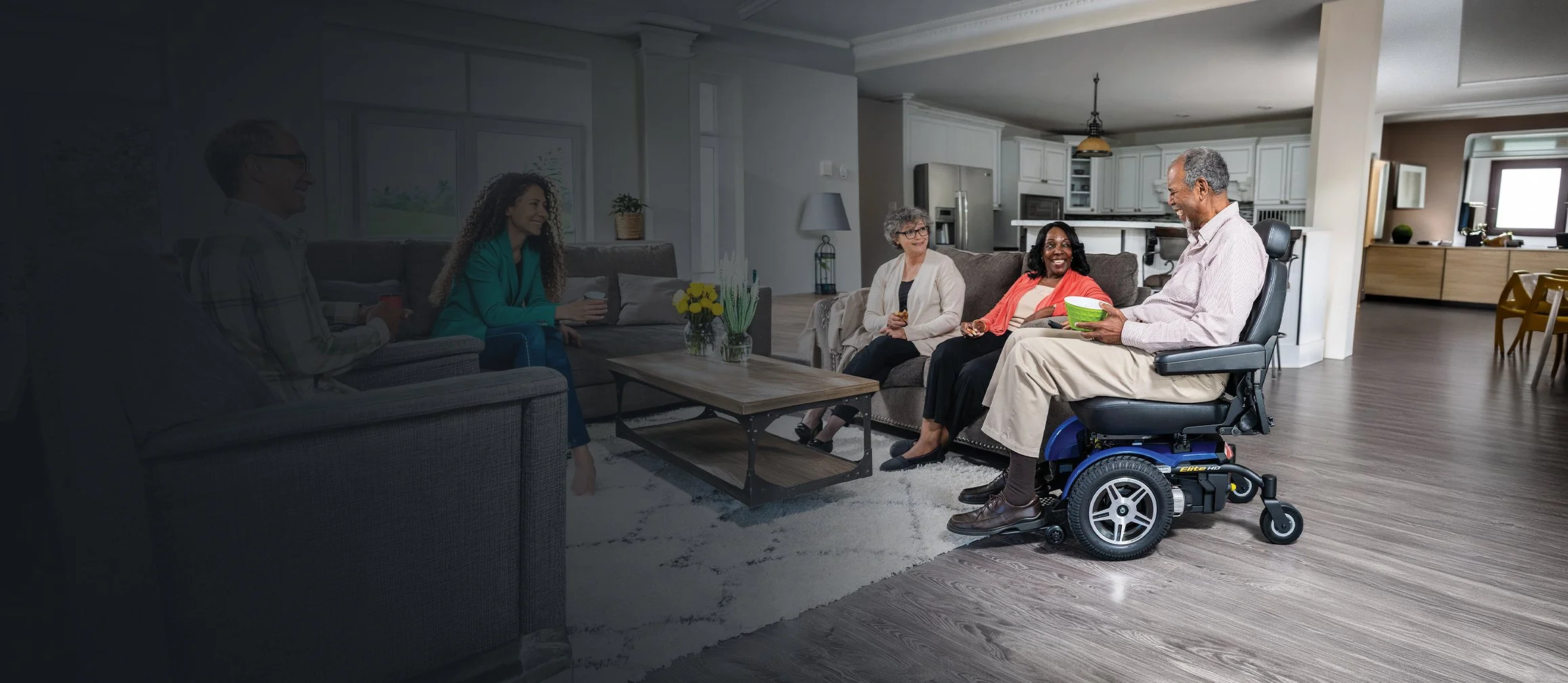
Standard & Group 2 Power Wheelchairs Freedom Within Reach.
Dependable power mobility designed to help individuals safely navigate the home and participate more independently in everyday activities.
RELIABLE POWER MOBILITY FOR EVERYDAY LIFE.
UNDERSTANDING STANDARD POWER MOBILITY
Everyday mobility with powered independence.
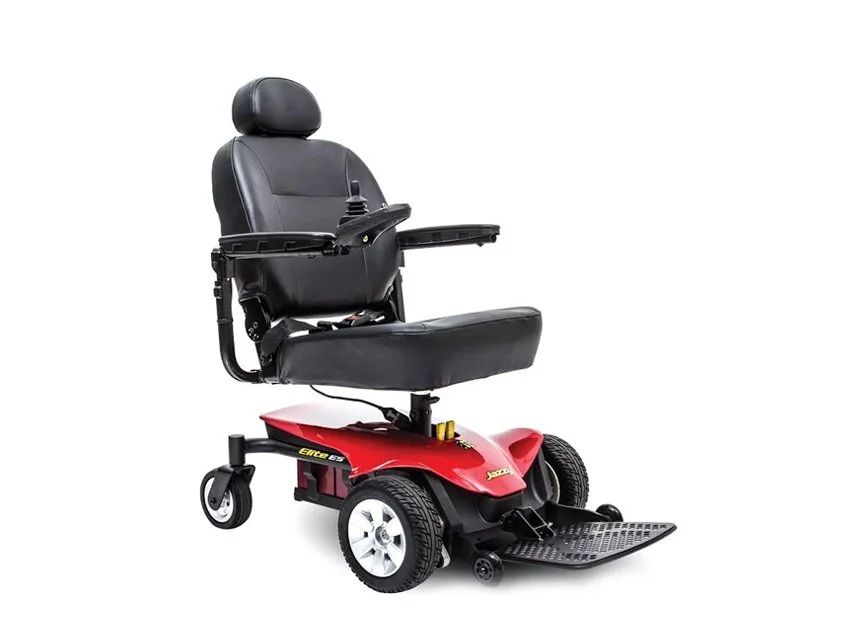
Standard and Group 2 power wheelchairs may be appropriate for individuals who cannot safely or independently complete mobility-related activities using a cane, walker or manual wheelchair. These systems typically provide a compact powered base, joystick operation and standard seating for daily mobility.
The right category matters. Standard and Group 2 power wheelchairs are different from complex rehab power systems, which support advanced electronics, specialized seating and multiple power functions.
EVERYDAY BENEFITS
Designed to make daily movement easier.
Features and performance vary by model and configuration.
Indoor Maneuverability
Compact dimensions and responsive steering can support navigation through doorways and common household spaces.
Standard Seating
Available options may include captain's seats, standard rehab seating and basic positioning components.
Stable Mobility Base
Power bases are designed to provide predictable control and stability during appropriate everyday use.
Reduced Physical Effort
Joystick operation can reduce the strength and endurance demands of manual mobility.
Daily Activities
Powered mobility may improve access to toileting, bathing, dressing, eating and other activities within the home.
Simple Controls
A traditional joystick provides straightforward operation for individuals who can safely use standard proportional controls.
WHO MAY BENEFIT?
When walking or manual mobility is no longer sufficient.
Recommendations are based on the complete evaluation, home environment, functional needs and applicable payer criteria.
A mobility limitation affects one or more daily activities in the home.
A manual wheelchair cannot be used effectively because of strength, endurance, pain or other limitations.
The home provides adequate access, turning space and surfaces for the equipment.
A cane or walker does not provide safe or sufficient mobility.
The individual can safely operate the power wheelchair or has appropriate assistance under applicable rules.
The wheelchair is expected to improve participation in mobility-related activities of daily living.
STANDARD POWER MOBILITY
Compact comfort and everyday maneuverability.
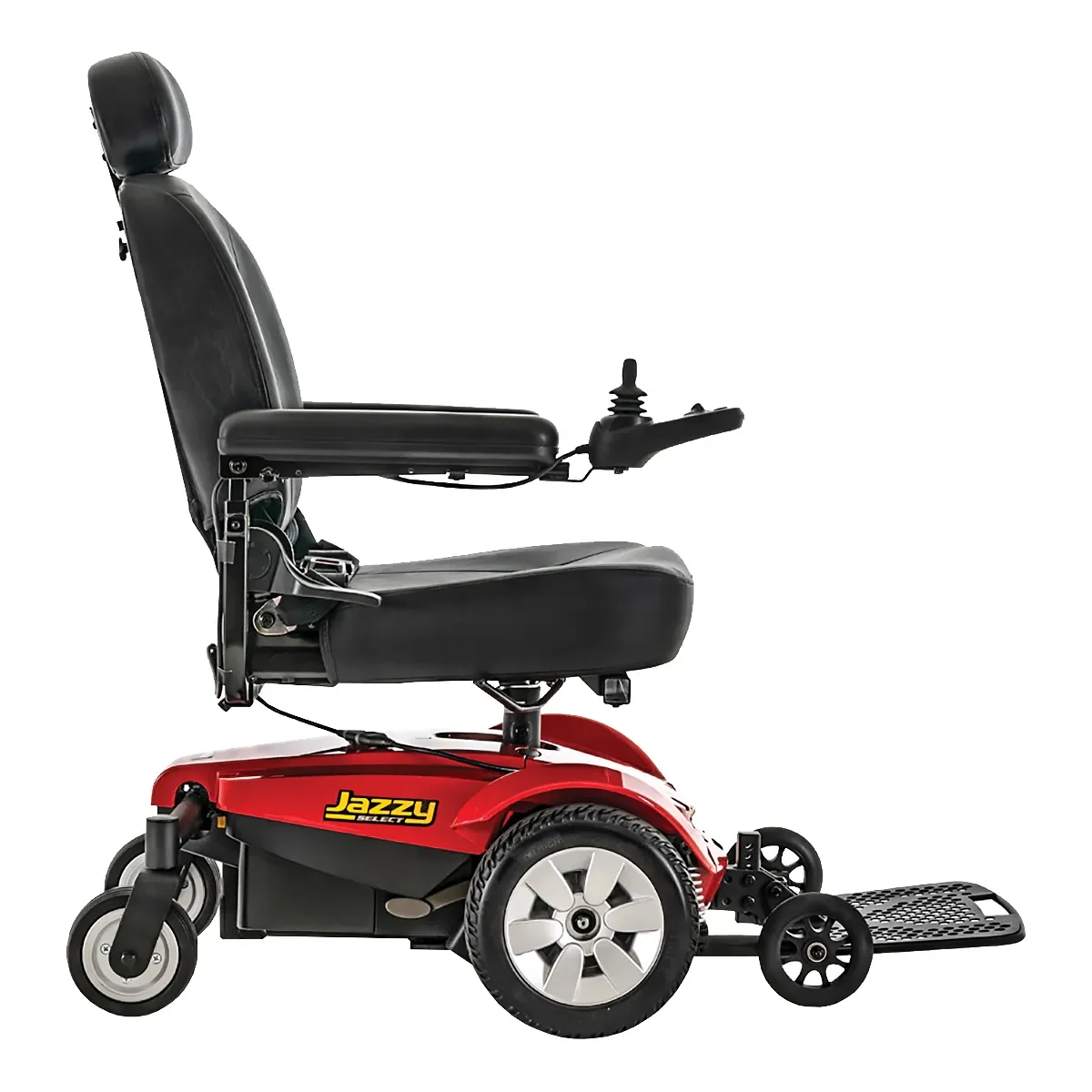
The Jazzy Select represents the type of standard power wheelchair that may support reliable home mobility with traditional joystick operation and comfortable standard seating.
Compact mid-wheel-drive design
Traditional joystick control
Comfort oriented standard seating
Designed for everyday maneuverability
Product availability, specifications and recommended configuration may change. Final selection is based on the individualized evaluation and funding requirements.
Safe operation comes first.
Vision, cognition, motor control, judgment, transfer ability and caregiver assistance are considered as part of the recommendation.
HOME AND SAFETY ASSESSMENT
A power wheelchair must work where life happens.
We consider the environment in which the equipment will be used.
Doorway clearance
Flooring and thresholds
Charging location
Turning space
Bathroom access
Ramps and entrances
CHOOSING THE RIGHT LEVEL
Standard power or complex power?
Standard & Group 2 Power
• Standard joystick driving
• Basic or standard seating
• Everyday in-home powered mobility
• Limited advanced electronics
• Typically no multiple complex power functions
Complex Power Wheelchair
• Advanced programmable electronics
• Specialized seating and positioning
• Alternative drive controls when needed
• Multiple medically necessary power functions
• Complex clinical and functional needs
CONFIGURATION CONSIDERATIONS
The details still matter.
Drive-Wheel Position
Mid-, front- or rear-wheel drive influences turning, tracking and handling.
Battery & Charging
Charging access, routine use and caregiver support are reviewed before delivery.
Arm & Foot Supports
Adjustability can support transfers, posture, joystick access and alignment.
Seat Size
Appropriate width and depth support comfort, stability and safe use.
Seat Height
Seat height affects transfers, table access, reach and lower-extremity positioning.
Transportation
Vehicle access, securement requirements, size and weight should be considered.
THE MOMENTUM PROCESS
Dedicated support through every step.
01.
Referral & Benefits
02.
ATP & Therapy Evaluation
03.
Equipment Trial
04.
Documentation
05.
Authorization & Order
06.
Delivery & Fitting
07.
Ongoing Support
Frequently Asked Questions. What To Expect.
-
Group 2 generally refers to power wheelchairs designed for standard powered mobility without the full advanced electronics and complex seating capabilities of complex rehab systems.
-
A power wheelchair uses joystick control and typically offers a smaller turning radius and different seating access. Scooters generally use tiller steering.
-
Coverage depends on the product classification, benefits, medical necessity, documentation, home use and payer policy. No particular model is guaranteed to be covered.
-
Many models can manage appropriate outdoor surfaces, but terrain, slopes, weather, range and manufacturer instructions must be considered. Coverage is generally based on qualifying needs in the home.
-
Momentum completes setup, fitting, joystick adjustment, charging education and safe-use training, and remains available for service and support.
Your mobility needs are complex. The process doesn't have to be.
Let our ATP-led team help identify and configure a mobility solution built around your medical needs, functional goals, home environment and lifestyle.